Harmelen / 2025
Farmhouse Harmelen
Challenge
Approach
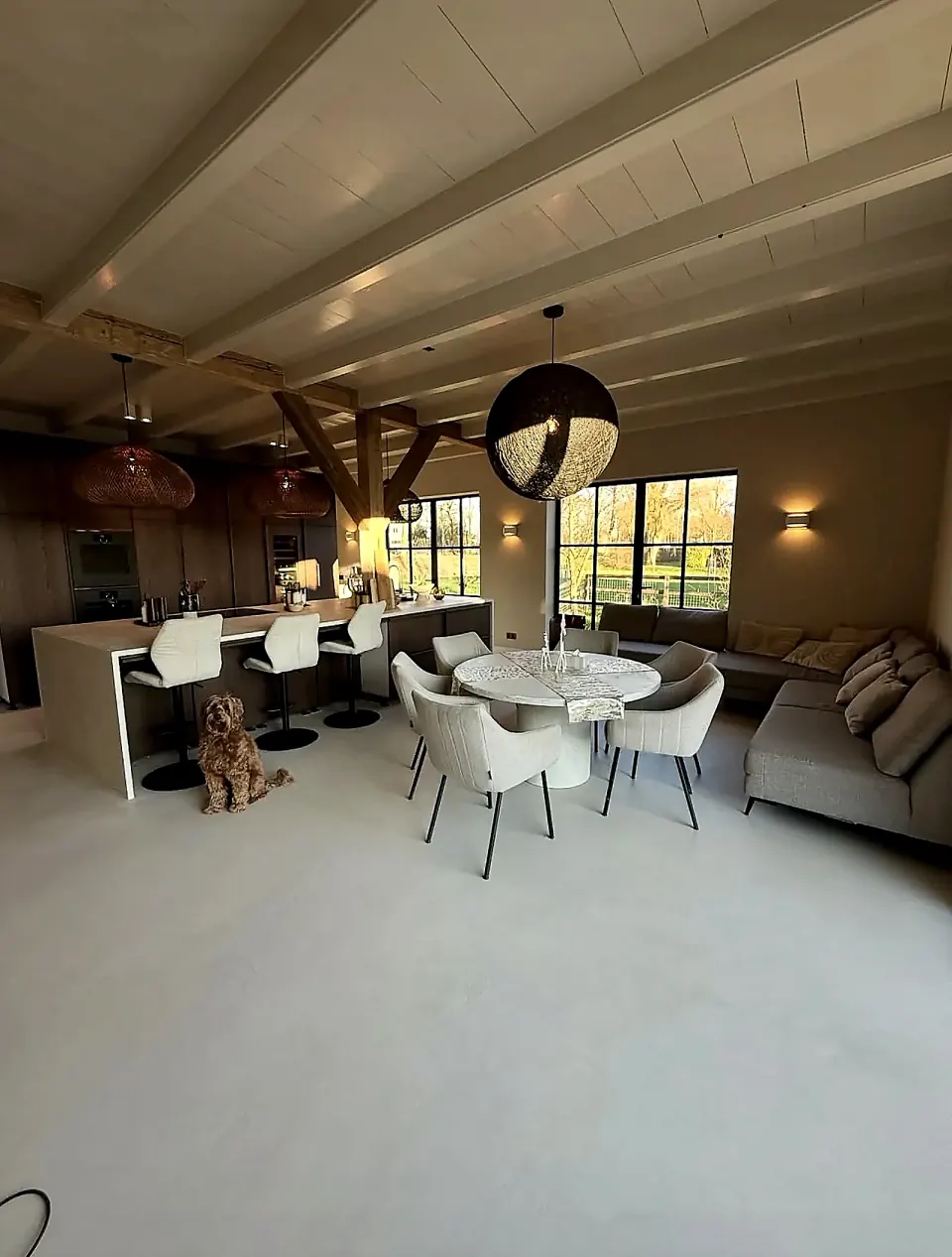
4-metre kitchen island, sink and 140 m² floor - seamless in one material.
In this renovated farmhouse in Harmelen, we installed a 140 m2 Forcrete Quartz Coarse microcement floor. The floor was built up in multiple layers and finished with a sealer suited to the agreed daily use. Wear still depends on load, cleaning and maintenance. The Quartz Coarse finish has a subtle, coarse texture that complements the warmth of the timber beams and authentic plasterwork. The palette leans towards warm beige-grey, selected alongside the natural light through the steel window frames and the rural character of the property. The floor runs from the living room into the open kitchen without tile grout lines. That creates visual calm and makes daily cleaning simpler, while junctions and maintenance remain part of the installation. The 4-metre-wide kitchen island is finished in the same microcement. The floor continues under and around the island, the upstands connect to the worktop, and the sink has the same colour and texture. The floor, island and sink therefore read as one visual whole. The owners originally considered travertine or hewn natural stone for the worktop. After a consultation, they chose microcement for its lower material weight, the ability to finish the 4-metre bespoke design without visible slab joints, and the sealer maintenance plan. This finish still requires timely cleaning and careful use. The existing substrate was assessed and prepared for the selected microcement build-up. The floor was installed over underfloor heating. Heat output and response time depend on the complete floor assembly, heat source, settings and commissioning and restart instructions; we do not attach a universal speed promise to the thin finish.
Location
Harmelen
Year
2025
Scope
Floor, Kitchen & Countertop
Material
Forcrete Microcement Quartz Coarse
Area
140 m²
Properties


Curious what microcement could do for your space?