Microcement: from preparation to first use
A floor can look finished before it is ready for everything. Agree three things: when the room will be ready for the work, when application will be complete, and when each type of use is permitted.
- Author
- Coated Surfaces
- Updated
Walking, placing furniture, showering and cleaning do not necessarily share a start date. The installed finish and the conditions determine which instructions apply. Your moving date matters to the conversation, but it cannot make the finish cure faster.
Start with a suitable base.
The space, substrate and junctions need to be ready for the selected system. Agree who handles preparation and who checks whether application can start.
The sequence is schematic. Duration and release for use are agreed for each project.
How long does microcement application take?
The work depends on the substrate, surface area, chosen finish and details. Repairs or additional preparation belong in the schedule too. A general number of working days does not tell you enough about your project.
Separate the application period from the waiting time afterwards. During application, layers need suitable conditions and must be ready for the next operation. After the final finish, restrictions on use may still apply.
Forcrete's application schedules describe particular systems. Their intervals between operations are not general permission to load the floor, mop it or use the shower. Ask not only when the work will be finished, but what you may and may not do afterwards.
Agree the choices before the installation date
Colour and texture determine the appearance. The substrate helps determine what is needed technically. Both need to be clear to coordinate the work properly.
Discuss in advance:
- which floors or walls will be finished;
- the intended colour, texture and sheen;
- what is known about the substrate, repairs and previous finishes;
- whether there is underfloor heating and what preparation it requires;
- which doors, skirting boards, furniture and bathroom fittings affect the work;
- which use date matters to you and why.
Do you have only one bathroom, or is a kitchen delivery already booked? Mention it at the start. That allows the necessary steps and arrangements to be considered. Do not book another trade solely around the last application day.
Getting the room ready
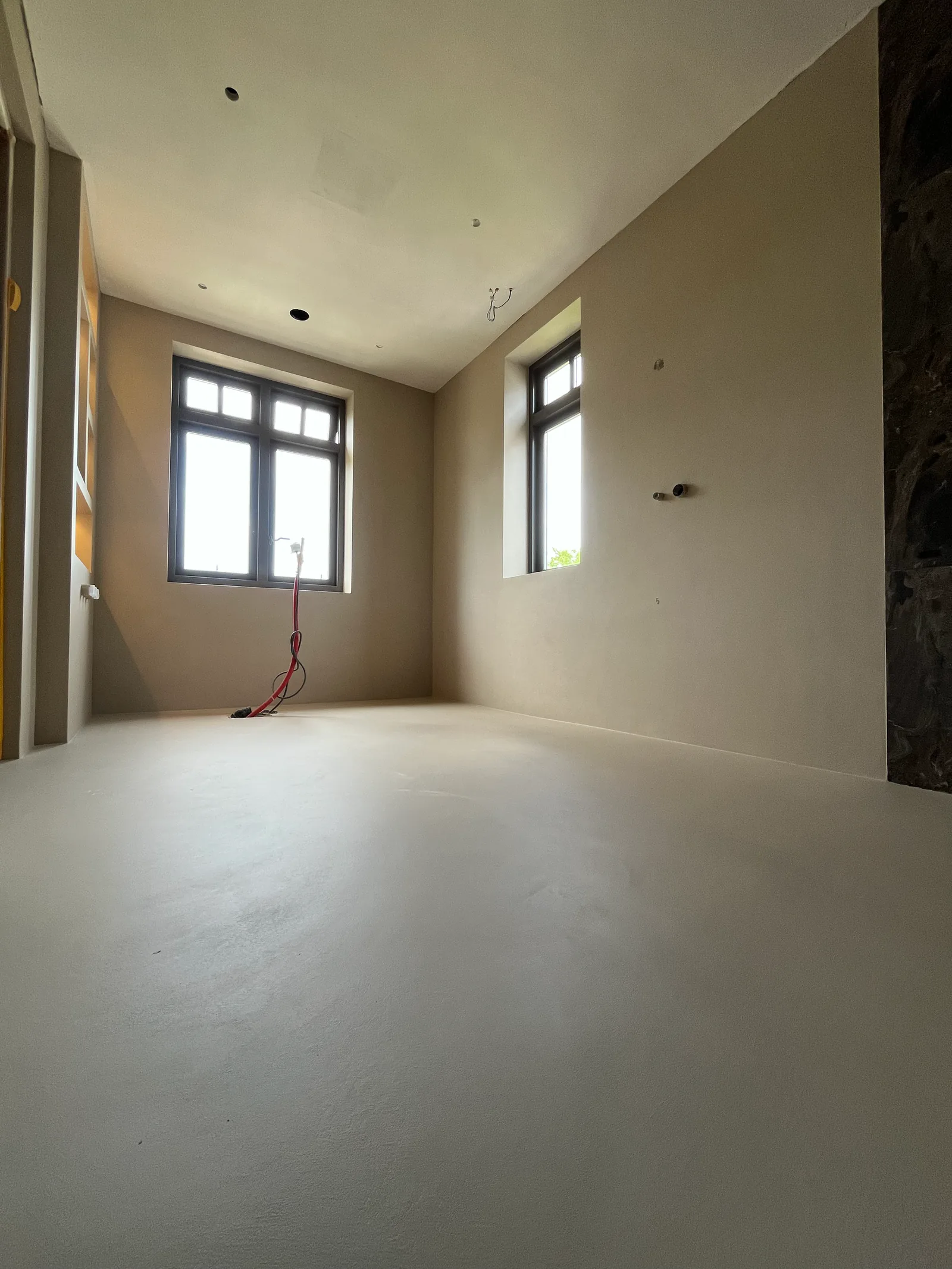
An empty room makes the work easier to organise, but everyone needs to mean the same thing by 'empty'. Discuss what must go, what can stay and who removes fittings. Access to edges, doorways and the route through the property matters too.
In a bathroom, the drain, pipework and fittings meet the finish. Agree which parts must be in place beforehand and who checks the connections. In a kitchen, skirting, appliances and later fitting work may affect the sequence.
A new or repaired substrate is not ready for the next finish just because a set number of days has passed. Moisture, soundness and movement need assessment for the chosen build-up. With underfloor heating, also establish which checks and commissioning procedure are required before finishing. The floor build-up guide explains why the base and the visible finish are different things.
Who is responsible for what?
Use this overview to agree the work. It is not a fixed allocation of responsibilities for every project. Establish who handles each item, who checks it and who communicates changes.
| Item | What needs agreeing beforehand? |
|---|---|
| Clear working area | What must be removed, who removes it and when will access be available? |
| Substrate | Who supplies the base, what assessment is needed and who confirms finishing can start? |
| Underfloor heating | Who supplies installation details and the required preparation, and who coordinates shutdown and restart? |
| Doors and skirting | What stays, what needs adjusting and who reinstalls it? |
| Bathroom fittings and drain | Which parts must be in place beforehand, and who completes and checks the connections? |
| Follow-on work and protection | When may the next trade start, and which protection is permitted? |
| Handover | Which checks, use instructions and outstanding points will be recorded? |
A clear handover helps avoid each party assuming somebody else has already checked something. Make sure the mover or kitchen fitter also knows the instructions that affect their work.
Application: each step has a purpose
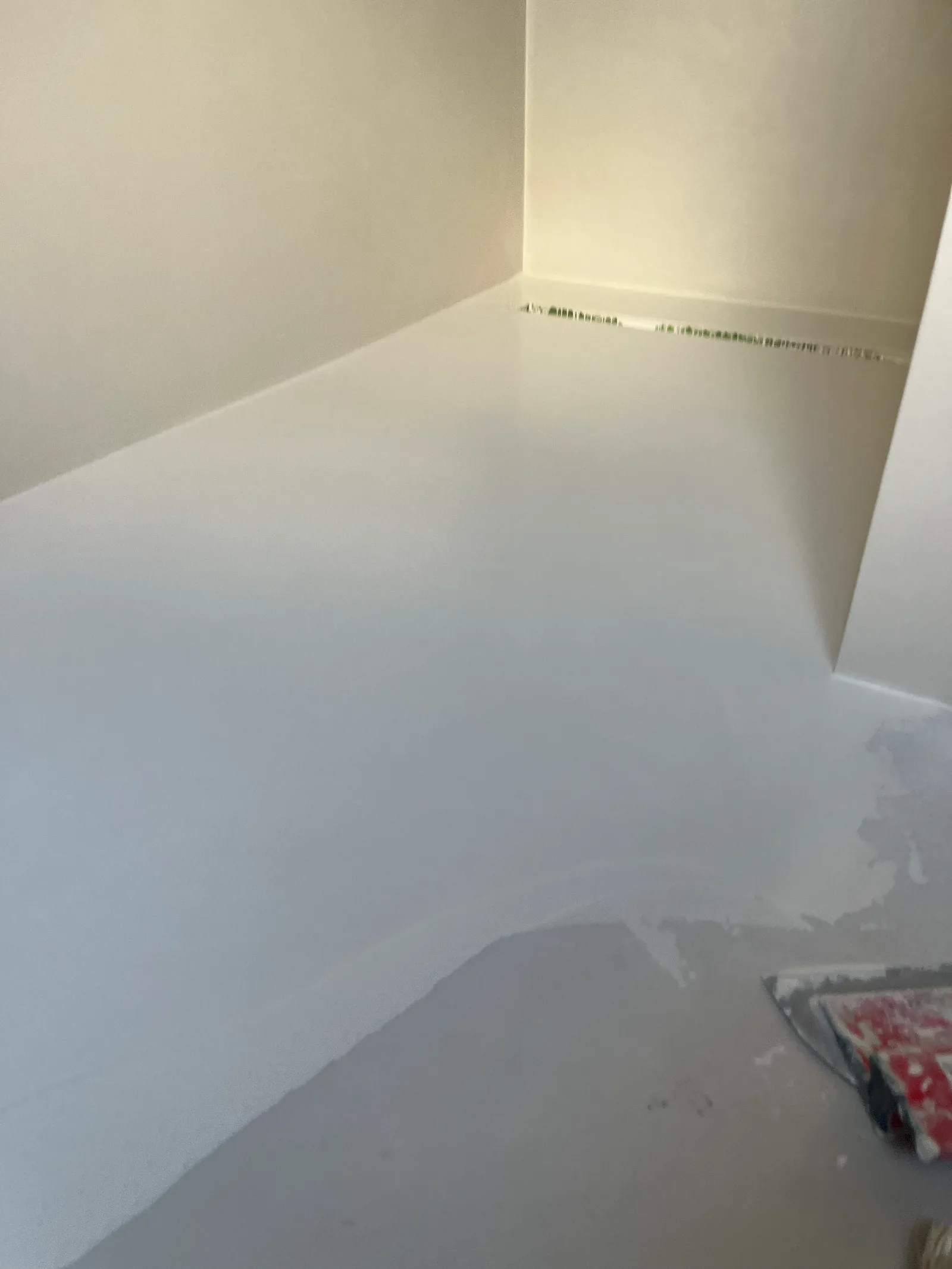
First, the substrate is prepared. The chosen system follows, with its base and finishing layers. The exact operations differ by application. A short video of one task does not show the complete floor build-up or schedule.
A working day is not simply a total of application hours. Materials have working times and conditions for receiving another coat. Temperature and ventilation can matter. Do not change those conditions yourself to save time.
A touch-dry surface and a fully cured protective layer are different things. Readiness for another operation during application is also different from permission for normal use. Keep those milestones separate when sharing the schedule with other trades.
What can change the schedule?
Some issues only become clear when the room is empty or the substrate can be examined further. A weak area, moisture, an unexpected junction or additional repairs may change the start or the preparation required.
A changed material choice, delayed preparation or another trade's later work may also affect the plan. Communicate changes as soon as you know about them and discuss what they mean for the remaining work.
Then check more than the revised final working day. Reconfirm walking, delivery, water use and heating arrangements wherever the change affects them. An earlier use date does not automatically remain valid after application has moved.
Application complete does not mean ready for everything
At handover, ask which finish and protective layer have been applied and which use instructions belong to them. Record when each activity is permitted and under which conditions. Make clear which operation starts any stated waiting period.
| Activity | Which agreement do you need? |
|---|---|
| Entering the room | When is limited walking permitted, by which route and under which conditions? |
| Placing furniture or fitting a kitchen | When are those loads and fitting operations allowed, and how will the floor and furniture feet be protected? |
| Showering or using water | When is the finish released for water contact, and are the necessary connections complete and checked? |
| Mopping or cleaning | When is it permitted, and with which cleaner, dilution and tools? |
| Covering the floor | When may covering be placed, which material is suitable and where may tape be used or not used? |
| Using the heating | When may the system restart, and which restart procedure applies to this floor and heating combination? |
Example: FORSHIELD-2KWB
Why agree each activity separately? Forcrete's FORSHIELD-2KWB aftercare sheet sets different restrictions for this protective layer:
| Item | What does the Forcrete sheet say? |
|---|---|
| Water contact | No water contact during the first 14 days after application. |
| Cleaning agents | No chemicals or cleaning agents on the surface during the first 30 days. |
| Chemical curing | Can take up to 30 days depending on temperature. Take extra care to protect the surface from heavy traffic and abrasion during this period. |
This example concerns FORSHIELD-2KWB. It is not clearance for your project or a use calendar for every microcement finish, and does not mean every Coated project has this protective layer. The instructions need to match the system actually installed; a different finish may have different instructions.
Your handover checklist
Take these five points to handover and record the answers:
- The finished areas and installed system, including the protective layer and any additional maintenance dressing.
- The final operation, when it was completed and the starting point for each agreed waiting period.
- The relevant use and care instructions, with a version or document date if one is given.
- Separate agreements for walking, furniture or kitchen fitting, water, cleaning, covering and tape, and heating.
- Who may start follow-on work, who assesses outstanding points and whom to contact if you are unsure.
Do not fill gaps in the information yourself. Have them confirmed before carrying out the activity concerned. Share the instructions with the mover, kitchen fitter or other trade working in the space afterwards.
Our terms set out general agreements. They do not shorten a longer product-specific waiting period. If instructions are unclear or conflict, have them clarified before the activity concerned. Permission to walk is not permission to shower or mop. For the routine after release, read the care guide.
Moving in or continuing the renovation
Book movers, kitchen fitters and other trades for when their work is permitted. Whether someone can walk across the floor is only part of the question. Trolleys, ladders, tools and heavy parts can impose different loads.
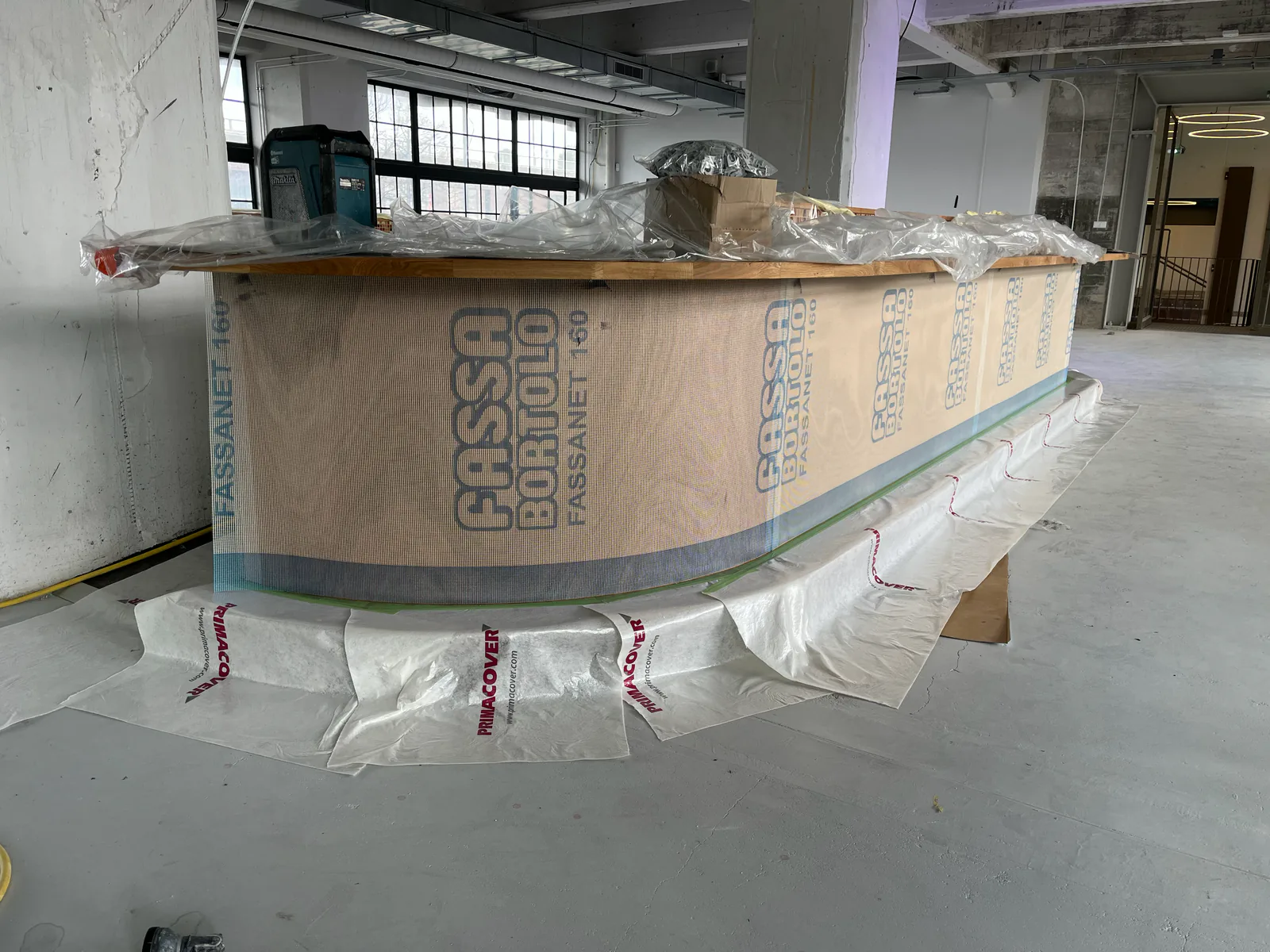
Agree how items will be brought in and whether temporary protection is needed and suitable. Do not have covering or tape applied simply because the surface looks dry. A rug also falls under the agreement about covering.
For a bathroom, the schedule needs to account for both the finish and the remaining connections. A fitted shower is not automatically ready to use. Our bathroom page explains how material, details and construction work together.
Frequently asked questions
How long must microcement dry before I can use the room?
There is no single period for every system and activity. Ask which finish has been applied and agree walking, furniture, water and cleaning separately. Feeling dry is not the same as being ready for full use.
Can I stay at home during the work?
That depends on which rooms are being finished and whether the remaining areas can be used safely. Discuss access, walking routes and facilities beforehand. Do not assume a temporary route across a floor under installation will be available.
Can a fan or extra heating speed up the schedule?
Do not change temperature or ventilation on your own initiative. Conditions need to suit the materials and the stage of the work. Feeling dry sooner does not prove the next step can begin.
When can my furniture or kitchen go back?
When the relevant loads and fitting work are permitted under the use instructions. Limited walking and placing heavy furniture are different activities. Discuss moving items through the room and protecting furniture feet too.
When can I shower again?
When the finish is released for water use and the necessary connections are complete. Do not infer this from the application duration or a touch-dry surface. A water-resistant material does not cancel the protective layer's waiting period.
May I mop or cover the new floor straight away?
Not before that activity is permitted for your finish. Agree cleaning products, covering materials and any tape separately. The care guide provides practical guidance for later maintenance.
When can the underfloor heating go back on?
Follow the agreed restart instructions for the installed floor and heating system. A substrate commissioning procedure before application is not a restart date for the finished floor. Have the installers coordinate this before operating the heating.
What if my contractor proposes a different order?
Have the parties involved agree that sequence together. The substrate, heating, drain and protection affect several trades. Revise the first-use arrangements too if the new sequence affects them.
Make your plan concrete
Tell us which room you want finished, what is there now and which other work is already booked. Include your intended use date and the reason: moving in, fitting a kitchen or using the bathroom again.
We can then discuss the preparation and agreements needed. The cost page helps you keep substrate work and finishing separate in the budget too.