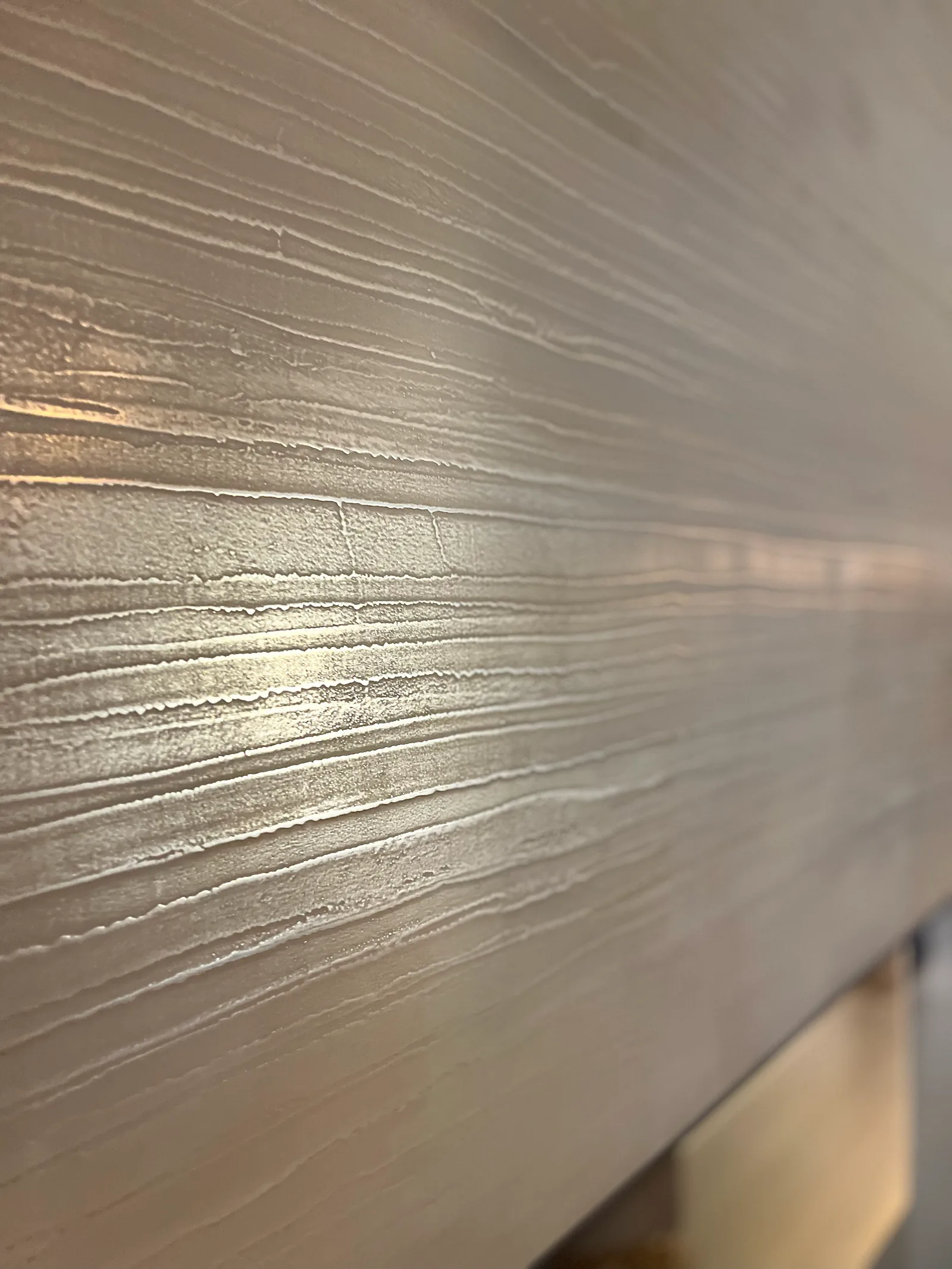
Microcement, beton ciré or a resin floor?
You are looking for a quiet floor with a continuous appearance. Soon you encounter several names: microcement, beton ciré, resin flooring, living concrete and lava stone. Sometimes the photographs look alike while the explanations are quite different.


A name alone does not establish what will be installed. Compare the complete system: material, substrate, preparation, texture, protection and use instructions. Only then can you judge which differences matter in your room.
Understand the names first.
Microcement and beton ciré
These terms are used for decorative finishes with a mineral or concrete-like appearance. Their use overlaps, and different formulations and systems sit behind them. Neither name alone establishes the binder, water protection or care requirements.
Ask for the product and complete build-up. Coated works with Forcrete. That is our choice as an applicator, not evidence that every product described as microcement shares its properties. If you are reading Dutch quotations alongside English information, check product identities rather than assuming that translated labels identify identical systems.
Resin floors
Resin flooring can, for example, use polyurethane or epoxy, with further variation within those groups. Application differs from a hand-trowelled microcement finish, which can affect the visual character. Compare physical examples of texture and sheen rather than relying on the name.
A polyurethane floor is not automatically thicker than every microcement floor. In both cases, consider the complete construction, including the preparation needed in your property.
Lava stone, microquartz and product-line names
Some names refer to an ingredient, appearance or manufacturer's range. They do not necessarily identify a fixed category with universal properties. Ask what binds the material, which aggregates or fillers are involved and how the surface is protected. Compare the specified product, not just its commercial label.
Power-floated concrete
A full concrete floor is a different construction from a thin decorative system over an existing base. Weight, available height and installation all need their own assessment. If that appearance is your starting point, read our comparison with power-floated concrete.

Decide what you want to see in the room.
A photograph can establish direction: warm or cool, quiet or expressive, matte or more reflective. At home, however, you will not view the floor from one camera position. Look at the scale of the marks, visible grain, tonal transitions and the way light returns from a sample.
Stand back as well as looking closely. A detail that dominates a small sample can read differently across a large room. If you want very little visual movement, say so explicitly. 'Concrete look' might mean almost uniform grey to one person and pronounced trowel marks to another.
Bring a timber, cabinet or stone sample into the comparison. The floor is a large part of a room, but it is never experienced entirely on its own. The colour and texture guide goes further into this material conversation.
Compare the questions that affect the project.
| Question | Why it matters | What to ask for |
|---|---|---|
| What is the exact system? | A general name can cover several products. | Manufacturer, range, finish and protection. |
| Can the substrate remain? | Preparation affects work, height and price. | Assessment of your actual floor or wall. |
| What height does it need? | Doors and transitions must remain usable. | Complete build-up, including repair and levelling. |
| What appearance is agreed? | Texture and sheen are difficult to judge in pictures. | A physical reference and expectations for the full area. |
| Is it suitable for this room? | A living room and shower have different demands. | Application and system-specific detail information. |
| How is it cared for? | Daily life is part of the material choice. | Instructions for this precise finish. |
| What happens if it is damaged? | A local repair may remain visible. | Assessment and repair options without an invisibility promise. |
| When can it be used? | Application and curing are separate stages. | Permission for walking, water and furniture. |
If an answer is missing, ask for it. Filling the gap with an assumption makes two proposals look more comparable than they really are.
Scratches, wear and stains are different.
Scratch resistance concerns damage from a scratching object. Wear resistance concerns material loss through use. Stain resistance concerns the effect of substances on a surface. A good result in one area does not answer the other questions.
A finish may tolerate ordinary use and still be damaged by a sharp object. A laboratory value also needs context. Ask which texture, sheen, protection and test method a performance statement covers. Do not transfer a result for a polished finish to a matte version without an explanation.
Describe actual use too: grit near the entrance, furniture movement, a wheeled office chair or a busy shop. These details help turn broad performance language into a useful selection discussion. No general material name guarantees that a pet, chair or dropped object cannot cause damage.
Bathrooms and heated floors need complete solutions.
For a bathroom, compare more than the word 'waterproof' in two brochures. The application, full build-up, drain connections, corners and maintenance need to fit. A water-resistant product is not a complete answer to a shower junction. Our bathroom page explains what matters for Coated's application.
For underfloor heating, the heat source, installation, screed and finish each have requirements. Ask about preparation, installation information and procedures. 'Conducts heat' alone predicts neither an energy bill nor how quickly the room will warm up.
Compare complete quotations.
A lower rate per square metre does not necessarily mean a lower project total. One quotation may include preparation that another lists separately or has not yet assessed.
Compare the measured surfaces, assumed substrate condition, preparation, complete system and chosen finish. Include niches, edges, stairs and junctions, plus arrangements for doors, skirting and sanitary fittings. Check the total, VAT treatment, possible additional work and how unexpected findings will be handled.
Use and maintenance instructions also belong in the comparison. Our cost page shows how we distinguish finishing from preparation. The project-specific quotation remains the basis for the final decision.
When another option may fit better.
Microcement need not be the answer to every brief. If you want no hand-applied variation at all, establish whether the offered finish matches that expectation. If replacing individual elements later is important, compare that with the repair approach for a continuous surface.
The available programme, substrate condition and willingness to follow use instructions may also decide the choice. A suitable material needs to meet those conditions as well as looking right.
Frequently asked questions.
Is beton ciré the same as microcement?
The terms overlap in practice. You need the product name and complete build-up for a reliable comparison, not just the label.
Is lava stone always harder?
The name does not establish that. Compare specified products, the same property and comparable test conditions. Hardness does not answer questions about stains, maintenance or repair by itself.
Which finish is easiest to maintain?
That depends on the actual finish and use of the room. Ask for its concrete care instructions. 'Low maintenance' becomes useful only when you know what actions are required.
Choose around your space.
Bring a few visual references and explain how the space will be used. We can discuss which Forcrete finish fits that direction and which conditions matter. Our completed projects show the material in real rooms.