Microcement repair starts with a closer look
A scratch, stain or small crack in your microcement. What next? Some marks need suitable cleaning; others need an assessment of the finish or substrate. The right next step starts with knowing what was applied and what has changed. Not with a repair product.
- Author
- Coated Surfaces
- Updated

This guide helps you document the situation and discuss remedial work. It is not a DIY repair recipe. Whether local treatment is possible, how it might look and when you can use the room again must be assessed for your surface.
What can you see, and what do you know?
Describe the mark without assuming its cause. A photograph does not automatically show whether the protective layer, decorative finish or substrate is involved.
- A stain or dull patch: note what was spilled and which cleaning products you used.
- A scratch or chip: show its location in an overview photograph and take a close-up with a size reference, without damaging the surface.
- A crack or loose piece: note when you discovered it and whether it changes. Do not cover it up before assessment.
- A dark or persistently damp patch: mention relevant water use, a leak or previous repair. Have the cause assessed.
Find the handover information too: brand, product, colour, protective layer and installer. 'Beton ciré' or 'microcement' alone is not enough to choose a treatment. The material comparison explains why these names do not describe one fixed system.
A stain is not necessarily damage
Start with the use and care instructions for your finish. The Forcrete Aftercare sheet warns against steam cleaners and harsh abrasives. It also notes that washing-up liquid can leave a discoloured build-up. Scrubbing harder is not necessarily the answer.
Does a mark remain after the permitted cleaning? Record the product used and ask for suitable advice before trying something stronger. A cleaner and a new protective layer serve different purposes. Forcrete describes Renovator as a maintenance liquid that forms a protective film, not a product for filling cracks or missing material.
For everyday cleaning, continue with the care guide. This page concerns a mark that needs a different assessment.
With a crack, start with the cause
A crack can be related to movement in the substrate. Forcrete discusses this in its maintenance advice on cracking and recommends professional assessment. This does not mean every visible line has the same cause, or that the cause can be established remotely.
The Belt and Braces floor instructions begin with assessing moisture, movement, cracks and weak areas. These instructions concern floor preparation. They are not a repair recipe for grinding or filling an occupied, finished floor yourself.
For a heated floor, explain how the heating is used and whether anything has changed. Do not increase the heat to try to make a mark disappear. The underfloor heating guide helps you identify the relevant installation and substrate information.
Local repair or a larger area?
This is a decision after assessment, not one based solely on the size of the damage. The existing build-up, cause and intended result determine which options can be investigated. An additional layer does not automatically resolve an unsuitable or moving substrate.
Discuss what might remain visible afterwards. Colour, texture or sheen may differ; an invisible repair cannot be promised in advance. Forcrete's information on material variation does not guarantee an exact colour match for replacement material either. This does not determine your warranty arrangements, but it is a reason to discuss the expected appearance beforehand.
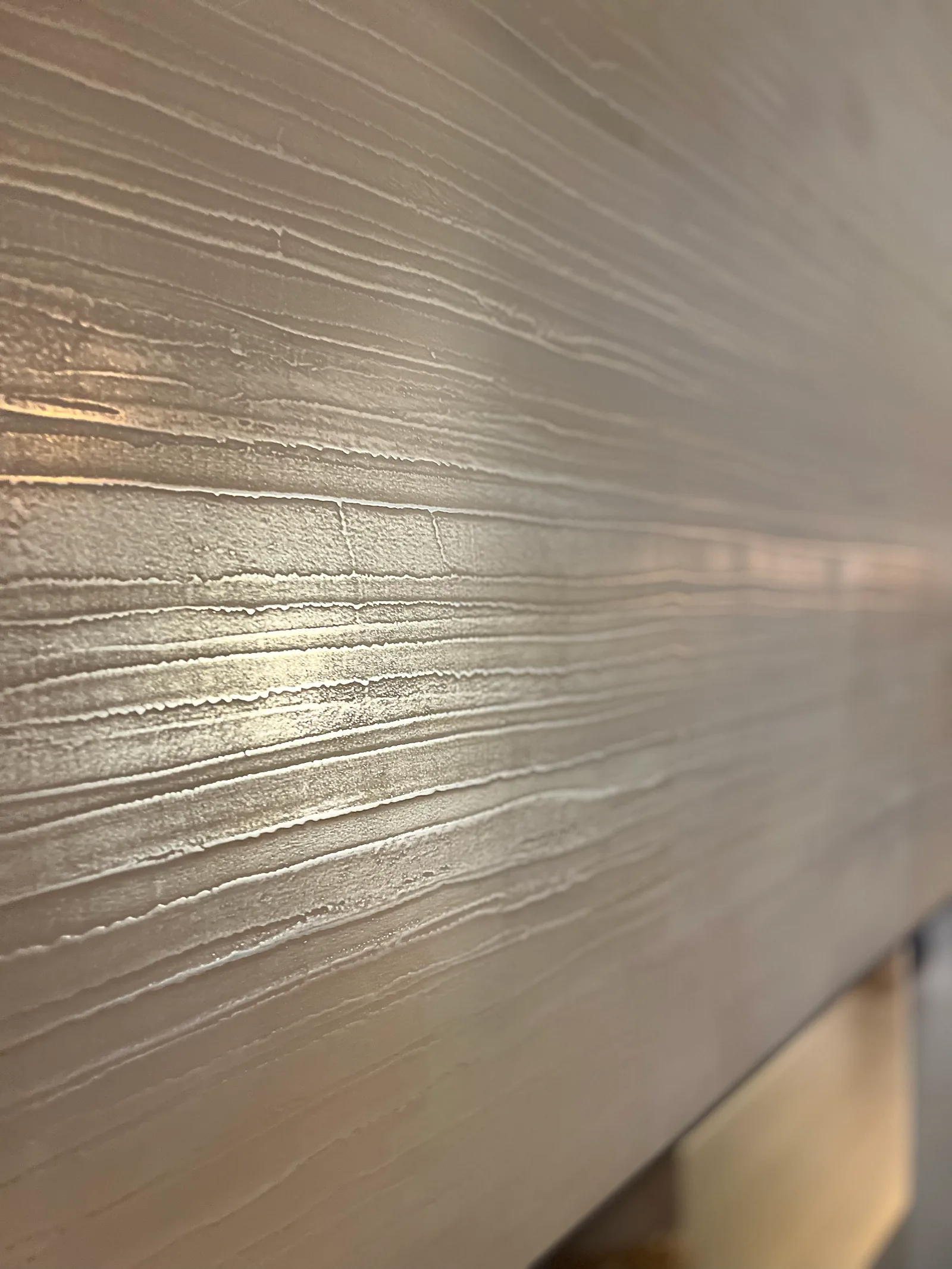
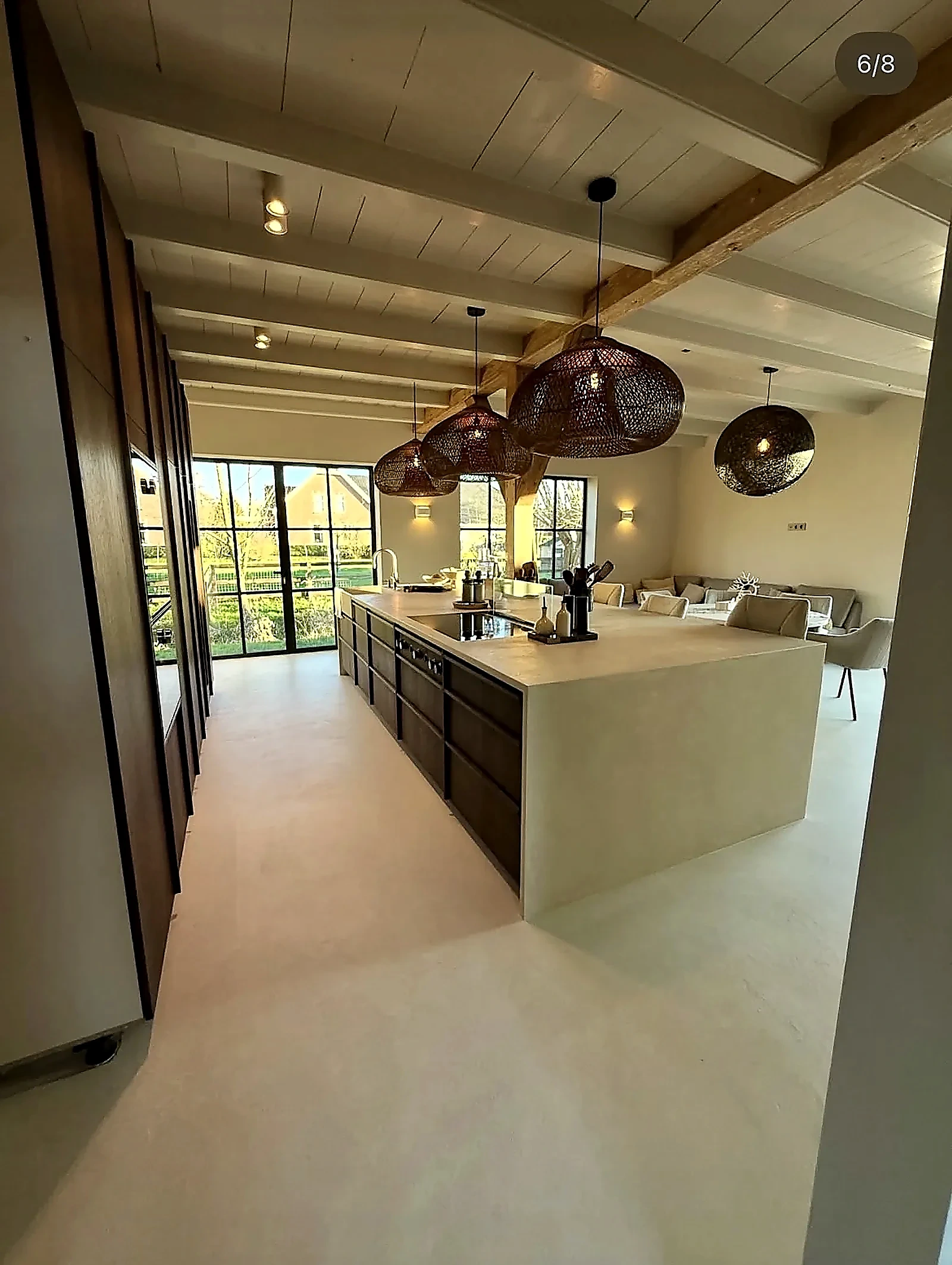
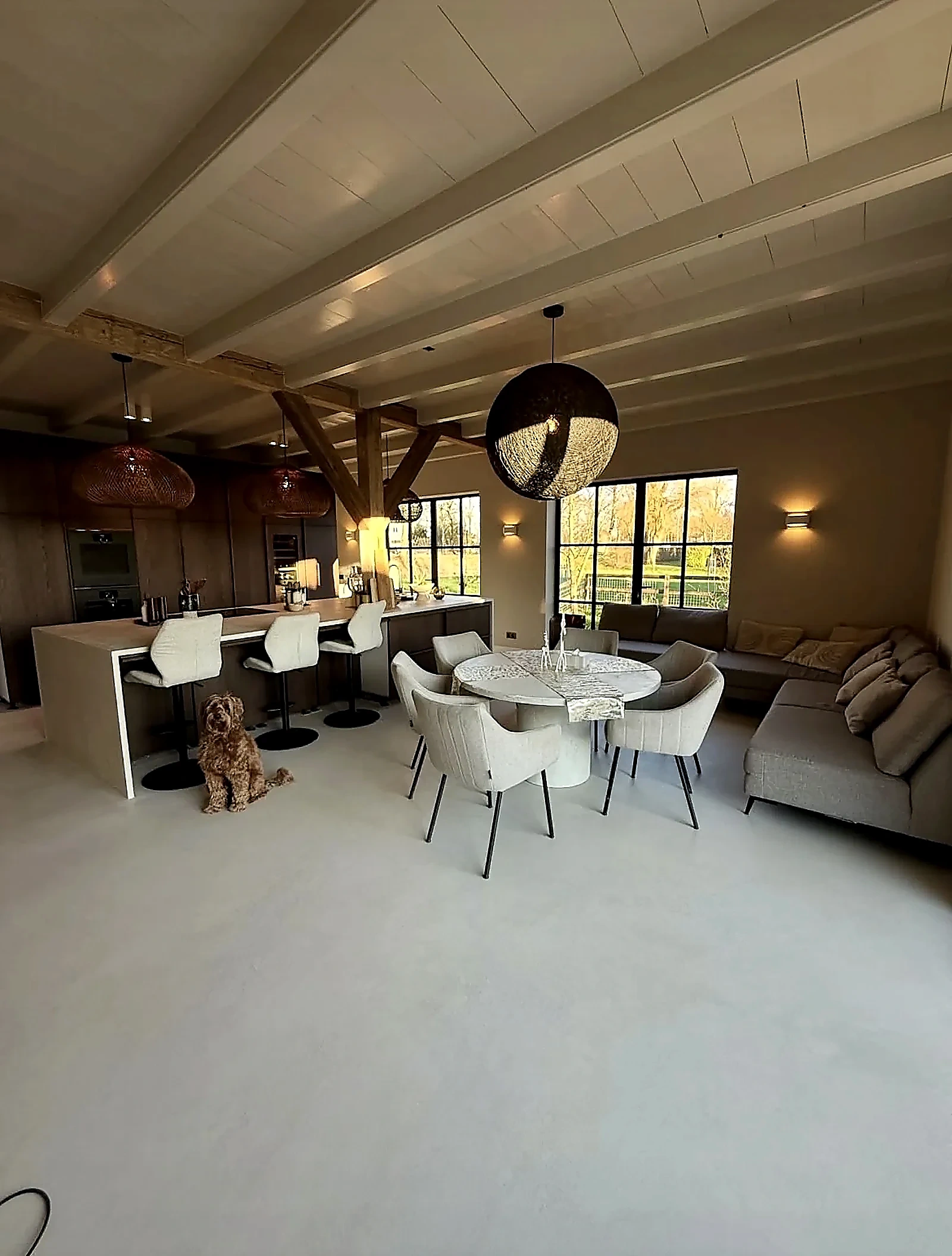
The project photographs in this guide show the finish at Farmhouse Harmelen; the separate detail photograph shows a surface texture. These are not repair examples or before-and-after images. The achievable result of a proposed treatment needs a separate discussion.
Extra attention in the bathroom
A mark beside a drain, corner, tap or junction also calls for attention to the surrounding build-up. Water-resistant material is not the same as a completely detailed waterproof bathroom. Covering a visible line does not prove that a possible moisture problem has been resolved.
Suspect a leak or see moisture outside the intended wet area? Limit further water use at that location and have the cause assessed by the appropriate professional. Explain where and when it occurs. For the relationship between the substrate, falls and junctions, read the bathroom details guide.
What helps with the first assessment?
This information gives the conversation a useful starting point. The checklist helps you gather it; photographs do not replace a necessary site inspection.
| Information | What should you record? |
|---|---|
| Overview | The room and the location relative to edges, joints or junctions. |
| Close-up | A clear photograph in ordinary light with a size reference, without scratching or picking at the surface. |
| Timeline | When you first noticed it, what happened beforehand and whether it changes. |
| Finish | Brand, product, colour, protective layer, installer and available handover information. |
| Previous treatment | Cleaning products, maintenance products and any earlier repairs. |
| Conditions | Relevant water use, leaks, heating or recent work in the room. |
Missing some information? Say so. An unidentified build-up is a reason to investigate further, not to guess a system name.
Agree on treatment and first use
Before any work, agree on the cause to be addressed, the area to be treated and the expected visible result. Record which products suit the existing build-up and whether another party needs to check anything. A repair proposal is different from a diagnosis based on a single photograph.
Do not sand, fill or reseal the surface yourself without an appropriate product specification. The FORSHIELD-2KWB technical sheet, for example, is intended for professional use and sets substrate requirements. That does not make it a general solution for every existing protective layer.
After treatment, ask for the applicable instructions on walking, water, furniture, cleaning and any heating. There is no single drying time for every repair. The planning and first use guide helps you separate those agreements.
This guide was checked against publicly available Forcrete information on 27 October 2026. The documents are also available through the official resources page. They do not replace a project-specific assessment or repair agreement.
Frequently asked questions
Can a scratch in microcement be repaired?
That depends on the damage and existing finish. First have the affected layer and suitable treatment assessed. An additional coat of sealer or wax is not a general remedy for every scratch.
Can a crack be treated locally?
Possibly, but the cause needs assessing first. If the substrate moves, treating only the visible line is not a substantiated solution. Discuss the possible approach and expected result after that assessment.
Will a repair remain visible?
It may. Colour, texture and sheen can differ from the existing surface; an invisible match cannot be guaranteed in advance. Discuss this before agreeing on treatment.
Does Renovator repair chips or cracks?
Forcrete describes Renovator as a maintenance liquid that forms a protective film. This is not the same as repairing missing material or a crack. Establish which treatment is needed and suitable first.
Can I sand a stain away myself?
Do not sand or use a harsher product without suitable advice for the finish. Record what caused the stain and what you have already tried. For ordinary cleaning, follow the care instructions.
Does damage mean the whole floor needs redoing?
Not automatically. Whether local treatment or a larger area makes sense follows from assessing the cause, build-up and desired appearance. A photograph or the size of the damage alone does not determine that choice.
How much does microcement repair cost?
That can only be established once the situation and required work are clear. New-floor rates are not automatically repair rates. Ask for a proposal describing the treated area, preparation and any other work separately.
How soon can I use the room again?
That depends on the treatment, products and conditions. Have the release for walking, water, furniture and cleaning recorded separately. The application day is not automatically the day when all use can resume.
Tell us what you can see
Have a question about a mark in your microcement? Get in touch with the information from the checklist. Include who installed the finish and which records you already have. A conversation can clarify what assessment is needed and whether we can help.
An initial message is not confirmation that Coated can repair every brand or type of damage. This keeps the next step and expectations clear.